
Area 59 of Alcoholics Anonymous serves communities throughout Eastern Pennsylvania and helps connect individuals—and those assisting them—with available A.A. services.The primary purpose of Alcoholics Anonymous is to carry its message to alcoholics who still suffer.
Local Telephone Hotlines – Confidential phone services that help alcoholics seeking help connect with a local A.A. member.
Cooperation with the Professional Community – Working with professionals and organizations who serve alcoholics, to provide accurate information about Alcoholics Anonymous and how it may be helpful.
Public Information – Sharing clear, factual information about Alcoholics Anonymous with the general public and the media.
Bridging the Gap – Helping alcoholics leaving treatment or institutional settings make contact with A.A. members and local meetings, supporting a smoother transition into A.A.
Local 24-Hour Hotlines connect you to a recovering alcoholic.
Harrisburg Area
717-234-5390
Lancaster Area
717-394-3238
Lebanon County
223-322-9305
Lehigh Valley
610-882-0558
Reading & Berks Area
610-373-6500
Southeastern Pennsylvania – Philadelphia, Delaware, Bucks, Montgomery, & Chester Counties:
215-923-7900
York Area
717-854-4617
ABE Intergroup (Allentown/Bethlehem/Easton)
www.aalv.org
610-882-0558
Hanover Area Intergroup
www.hanoverintergroup.org
800-296-9289
Harrisburg Area Intergroup
www.aaharrisburg.org
717-234-5390
Lancaster Area Intergroup
www.lancasteraa.org
717-394-3238
Lebanon County Intergroup
www.lebanonpaaa.org
223-322-9305
Pocono Mountain Area Intergroup
www.poconointergroupaa.org
570-424-8532
Reading Area Intergroup
www.readingberksintergroup.org
610-373-6500
Northeastern PA Intergroup
www.aaintergroupnepa.org
570-654-0488
Southeastern PA Intergroup
www.aasepia.org
215-923-7900
York Area Intergroup
www.york-pa-aa.org
717-854-4617
Purpose: To inform professionals and community groups about A.A.—what it is, what it does, and what it does not do.
Who It Serves: Professionals such as doctors, nurses, social workers, therapists, clergy, educators, lawyers, judges, and law enforcement officers.
Goal: To help professionals understand how A.A. can be a resource for people with a drinking problem, so they can refer individuals who may benefit from attending A.A. meetings.
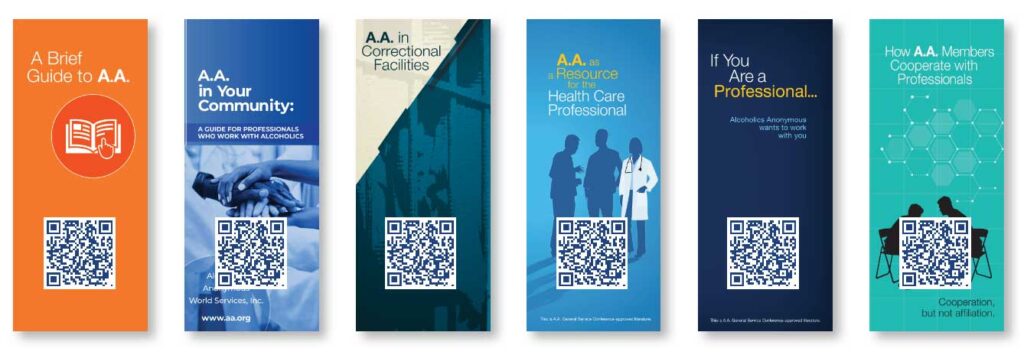
Giving presentations at hospitals, schools, or professional conferences
Supplying A.A. literature (like pamphlets or meeting directories) to counseling offices or community centers.
Hosting Q&A sessions or panel discussions with professionals
Responding to inquiries from organizations seeking to learn more about A.A.
Example: A CPC committee member might speak to a group of medical students about the role A.A. can play in a treatment plan for someone with alcohol use disorder.
Clarifies Misunderstandings: CPC work helps address misconceptions, such as the idea that A.A. is affiliated with a particular religion or only works for certain types of people.
Purpose: A service that helps ensure the general public understands what Alcoholics Anonymous is, what it offers, and how to find it.
Goal: To reach people who may need help—or who know someone who does—by providing accurate information about A.A.’s purpose, principles, and availability.
Available A.A. Literature
Literature published by A.A. World Services, Inc., is a resource for recovering alcoholics and other individuals. In our materials, you can find out more about Alcoholics Anonymous, its history, and how it works. We publish items in English, Spanish and French.
Set up an A.A. information table at community health fairs, recovery events, or town festivals.
Provide pamphlets and meeting directories to libraries, hospitals, colleges, and public bulletin boards.
Give presentations at high schools about Alcoholics Anonymous and how it differs from treatment programs.
Collaborate with local media to air A.A. public service announcements (PSAs) on radio or television.
Maintain a local A.A. website with meeting info, newcomer resources, and FAQ sections.
Place A.A. posters or flyers in public transit hubs, churches, clinics, or places of employment.
Respond to requests from community organizations (e.g., civic clubs or youth programs) to provide speakers or info sessions.
Purpose: Connects Alcoholics who are just coming out of treatment, correctional, or other institutions with a Temporary Contact to help introduce them to the A.A. Program.

Connecting A.A. Members inside our area’s institutions to our outside Alcoholics Anonymous community